Showing posts with label Cake. Show all posts

Wednesday, 22 June 2016

Tres Leches Cake

I came across tres leches cake when I was looking for a dessert to serve after mole poblano. However, I decided against it and made a passionfruit cheesecake instead. Because it is a cake, I thought it wouldn’t be puddingy enough. But I was wrong, it’s incredibly sweet, creamy and rich, the best way I feel I can describe it is that it is like condensed milk in cake form. With cream on top. So yeah, pretty pudding-like. I’m glad I did make it in the end, even if it wasn’t for any particular occasion.

It’s an interesting recipe. You make a cake, similar to a chiffon cake, as it is lightened by beaten egg whites. The cake also doesn’t contain any butter or oil, which was a  new thing to me. Once it is cool, you pour over a mixture of condensed milk, evaporated milk and cream, in stages, so it gets a chance to fully sink in, then leave to absorb. Top with softly whipped, sweetened cream and maraschino cherries, and there you have it.  It definitely tasted better after a night in the fridge, it had firmed up somewhat- although it was still good right away.  It also kind of reminds me of Indian desserts- very sweet and milky. Which has lead me to think a version with rosewater and cardamom as flavourings would be delicious, if inauthentic.


There are loads of recipes for this, I used this one (scroll to the bottom for the recipe). I also added the optional splash of rum to the milks, which I liked- I think it stopped it from being too much like nursery food. Some other recipes suggested Triple Sec instead, which might be nice, although I think I would prefer the deeper taste of a spirit. I was a bit concerned about the quantities of evaporated and condensed milk- this recipe just refers to ‘a can’ of each, and as it is an American site, sizes of can could well vary. Doing a bit of research, the quantities of these should be about the same, so I used a 410g tin of evaporated milk, a 397g of condensed milk, and the specified ¼ cup of cream. It made slightly more than my cake would absorb, but it tasted great. 


Saturday, 7 November 2015

Christmas Brownies


Just over a year ago, I made a large batch of chocolate and sour cherry mincemeat. With it, I made normal mince pies and these mincemeat Eccles cakes. However the sheer quantity I made meant I still had two big jars left this year. It's not a big deal, as it keeps, but I do want to get through it so I can try something new, although that probably won't be till Christmas 2016 now!

I've thought about making brownies with mincemeat before, hadn't got around to it until yesterday. I thought they were really good, and you could use your own homemade or shop bought mincemeat- no need to make the chocolate and sour cherry one. I do like the cherries with the chocolate though.

There were a few changes I made from the basic brownie recipe I use. Because the mincemeat is sweet, I reduced the sugar down to a mere half kilo. I also used the juice of half a large orange in the brownie mix. Possibly because of the mincemeat, I found this took longer to cook than normal, just over an hour, and I had to cover them with foil mid-bake t stop them from getting too dark. Finally, I wouldn't usually bother, but as these are Christmas brownies, I gave them a  snowy dusting of icing sugar.

These would be nice for a pudding, especially if slightly warm- I would serve them with some lightly whipped cream to which I had added a slug of Cointreau or Grand Marnier.

Ingredients
200 grams butter
200 grams plain chocolate
500 grams caster sugar
4 eggs, large
250 grams plain flour
4 tablespoons cocoa
350g mincemeat


Method
Preheat oven to 180C, Gas 4
Prepare a small rectangular roasting tin or oven proof dish approximately 8 x 12" (20x30cm). Melt the butter and chocolate over a pan of simmering water. Cool slightly. Stir in the sugar and juice from the cherry jar.Add the eggs, one at a time, stirring until well blended each time.
Add the flour and cocoa and beat for about 1 minute, until smooth. Fold in the cherries. Pour into prepared tin, and bake for about 1 hour, covering with foil if it starts to look too dark. The mixture needs to be just cooked, so start testing with a cocktail stick at about 40 minutes - it should have moist crumbs, but not wet batter, still clinging to it.
Cool in tin until cool enough to handle, then turn out and leave until completely cold before cutting into squares.

Thursday, 15 October 2015

Black Cake: The first of the Christmas recipes...

... Yes it is rather early to be writing about anything festive. But I wanted to get started on this year's Christmas cake, and it requires quite a lot of advance planning.

This year, I am not making the traditional British Christmas cake,  but instead am making black cake, which hails from the Caribbean. Instead of making the cake in advance, and then feeding it with alcohol, you soak the fruit for the cake in alcohol, for somewhere between 2 weeks and 6 months, and then mix it into the cake batter. The alcohol in question is different too, instead of brandy you use a mix of dark rum and sweet wine.

As I mentioned, this is a traditional Caribbean recipe, but I first heard of it in Nigella Lawson's How to be a Domestic Goddess, and she in turn got it from Laurie Colwin- a wonderful writer who I discovered a few years ago- if you like reading about food, I can really recommend her books.

It's quite hard to make Laurie Colwin's recipe, as it requires burnt sugar essence, which is not an expensive ingredient, but a very elusive one. Nigella uses treacle, but according to my internet sources, it's not really the same. I'll probably have to make do with treacle though.

In terms of soaking the fruit, I used rum, madeira, and also added a few dashes of bitters, which I saw suggested online, and liked the idea. The soaked fruit makes enough to make two cakes. I am planning on making one cake with half the ingredients, and leaving the remaining boozy fruit mix to macerate for the maximum six months, to see the difference.

Here is Nigella's recipe and here is a photo of some of the soaked fruit. There is loads of it- about 2 kilos of it- but a spoonful of brown pulp makes a slightly better photo than a tub of brown pulp.


So far, I have just got to the fruit soaking part- I will report back in few weeks when the cake is made!

23/11/15- Baking the cake
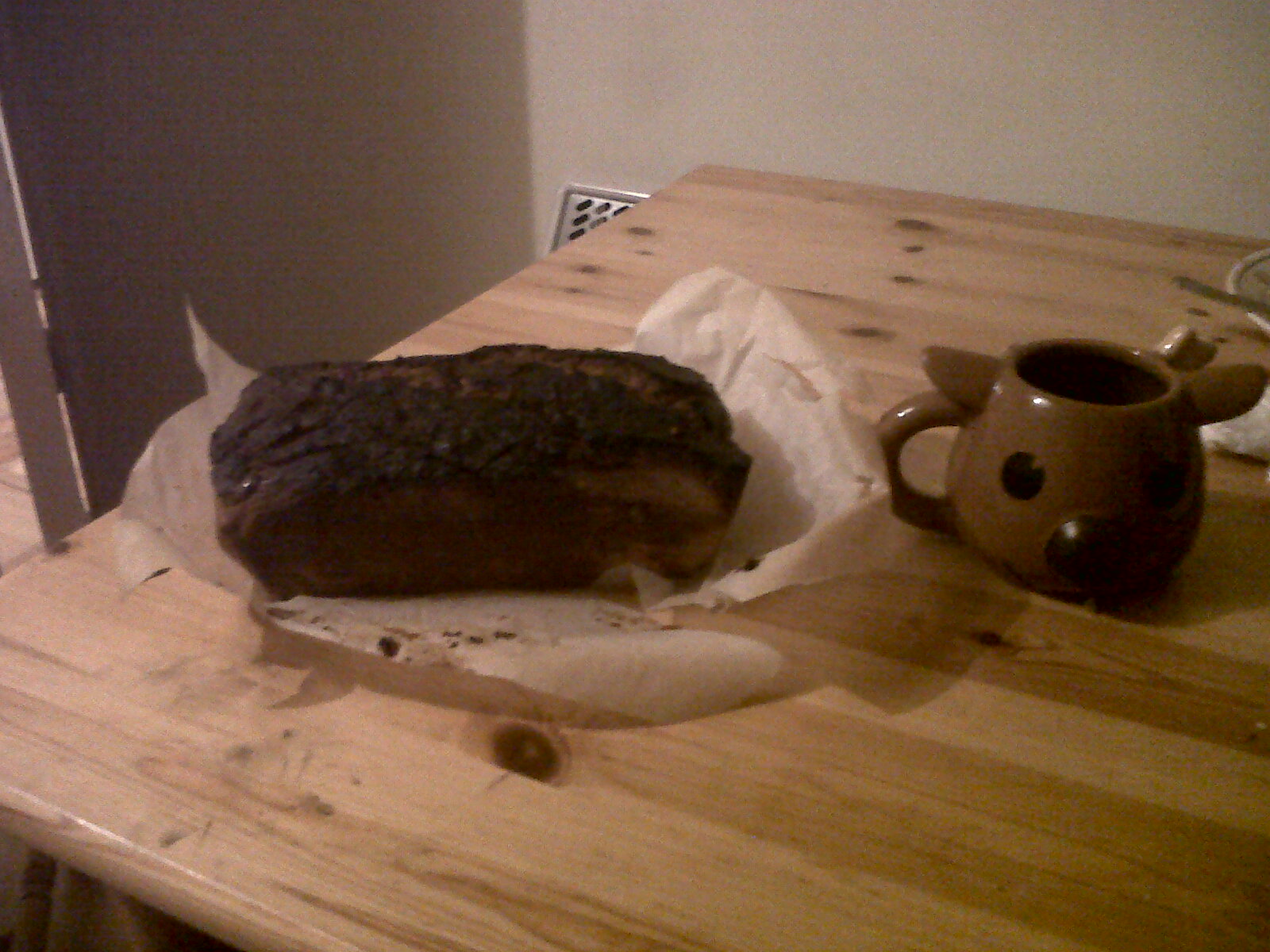
After about 6 weeks of soaking the fruit, I baked the cake. I stuck to Nigella's recipe, but added 2 spheres of grated stem ginger. The cake isn't as dark as the photos of black cake that I have seen, but I think without the elusive burnt sugar essence, it was as dark as I could have gotten in. I am leaving the cake now until Christmas, but tasting the cake mix, and the half baked bit of cake that clings to the knife when you check if it is ready makes me feel pretty confident that it is going to be a success. It has a complex, caramelly flavour, that hopefully will mature between now and Christmas. I am undecided whether or not to ice it. I don't especially like royal icing, but it does make it feel more festive- I shall see how I feel in December.


And finally! The difference between black cake (right), and the more British Christmas  cake (left)


Tuesday, 26 May 2015

Pineapple and Coconut Cake

In my last blog post for pineapple curd, I mentioned using it as a filling for a coconut cake- here is the result:


Taste-wise, it was lovely- obviously I am not doing anything new with the pineapple-coconut flavour combination, but it came off well as a cake. For the cake itself, I used a Nigella recipe for a coconut cake. The original recipe uses a coconut buttercream as the filling, and I just switched it with some of my pineapple curd. I haven't tried the original, so I can't compare, but I did like my version's contrast of sweet coconut with tangy pineapple. I was a little apprehensive about part of the recipe- you soak the desiccated coconut in 150ml water, and then put all of it into the cake batter- I wasn't sure if adding so much water would make the cake heavy. But in reality, it came out as a very light sponge. I kept the topping the same- just an icing made with Malibu- but I sprinkled on the zest of a lime, which was my own touch, and one I would keep for this recipe.


Cake
25g unsalted butter, softened
225g caster sugar
1/2 teaspoon pure vanilla extract
4 eggs
200g self-raising flour
25g cornflour
1/2 teaspoon baking powder
50g desiccated coconut, soaked in 150ml boiling water

Filling
About 6 tbsp pineapple curd (see recipe)

Topping
2-4 tablespoons Malibu
125g instant royal icing


Preheat the oven to  180C / 160C fan, and line two 20cm sandwich tins. At this point, I boiled the kettle and soaked the dessicated cocount- you need to give it time to cool before adding it later. Cream the butter until pale and fluffy, and cream in the sugar. Beat in the vanilla extract. Mix in one egg, along with a tablespoon of self raising flour. Repeat with the 3 other eggs (again, with a spoonful of flour with each one). Sift in the remaining flour with the cornflour and baking powder, and fold in. Finally, fold in the coconut and water. Divide between the tins and bake for about 20 minutes, until a skewer comes out clean. Let them cool for about 5 minutes, then gently remove them from the tins, and let them cool completely on a wire rack.

Place one n the cakes on a plate, and spread over the curd. Put the over cake on top. Sift the icing sugar into a bowl, and mix in the Malibu. Spoon and smooth over the top of the cake. Enjoy!


Wednesday, 28 January 2015

Claudia Roden's Honey Cake


One of my all-time favourite cookery books, The Book of Jewish Food by Claudia Roden spends more time next to the sofa or the bed for comfort reading, rather than being used for actual recipes- not that the recipes aren't wonderful, but it is a really compelling read too. I've been intending to make a project of cooking my way through it, but it something of an undertaking.

Claudia Roden's book is divided into two parts- Ashkenazi food and Sepherdic food. The majority of the recipes I have made from the book have been the Sephardic dishes, such as bazargan, a nut-heavy bulgar wheat salad made tart with pomegranate molasses. I've experimented with some of the filo pies, both savoury and incredibly sweet (such as m'hencha, a coil of almond paste, wrapped in filo, and then liberally coated in cinnamon and icing sugar). And I have spent a long time painstakingly making just one batch of kobeba (or kibbeh,or kubba, depending on where you are from). There have been other recipes I have made, but even so, I don't feel I have really scratched the surface of the collection of recipes in The Book of Jewish Food.

I haven't really touched the Ashkenazi side, with the exception of some hamantashen- rich poppy seed pastries, and this honey cake which I made this weekend. It is once of those convenient cakes that taste delicious and keep really well. It is quite rich, and stands well alone with tea. Although you could do what I did for the first servng of it, and have it with butterscotch sauce and ice cream. The cake is traditionally served at Rosh Hashanah, but I would happily have it any time of year.

The recipe can be found here.


Saturday, 8 November 2014

Hazelnut, Yoghurt and Blackberry Cake

This is a simple adaptation of one of the first recipes on my blog, a hazelnut loaf cake. All I have done is stir 200g blackberries and some the juice of a small orange into the cake batter, to make a less plain cake. I like it both plain and with the fruit. When it is plain, I think it is nicest with some stewed fruit or jam or curd (I suggested this spiced damson curd), and with the fruit in the cake, it's good just by itself.

I have made the name a little fancier- the original recipe always had yogurt in it. Two reasons- I like the way it sounds, and you can taste the tang of the yogurt in the cake, so I think it is worth mentioning.

Skinning the hazelnuts is a bit of a faff, so I don't do it very thoroughly, but I definitely think it is worth the extra effort to use whole hazelnuts that you grind yourself. The flavour you get is much more intense than anything you could get with ready-ground nuts.


Saturday, 26 October 2013

Plum Gingerbread Swirled with Cheesecake

A quick food shop last week turned into a splurge on autumnal produce-I came back with rough-skinned russet apples, root vegetables to turn into a comforting, cream enriched soup and two big punnets of plums. Most of the apples are gone, the majority just eaten on their own, or with some sharp cheddar. A few were used as a topping for a pecan cake, sprinkled with lots of cinnamon and nutmeg. The vegetables have been peeled, cooked, pureed and eaten; I had forgotten how nice a simple vegetable soup could be, especially when you've caught the dreaded cold, like I had. I still have a lot of plums though, even though I like them a lot I was lacking inspiration. Thank goodness for the internet, especially at the moment when I am living without most of my cookery book collection. The first thing that caught my attention was plum gingerbread, then this plum traybake with cheesecake and finally these gingerbread cheesecake bars.

The cake I made came closest to the gingerbread cheesecake bars. The recipe was essentially the same, but with a few additions. Plums, obviously, but also some stem ginger to the gingerbread mix, and some lemon zest and juice to the cheesecake. I omitted the ground ginger from the cheesecake batter, as I wanted complete contrast of the two mixes. Also, instead of pouring the gingerbread batter in the cake tin, covering it with the cheesecake mix, then marbling the two, I put alternating spoonfuls of the batters in the tin and then swirled them up with a knife. I think my method would be easier, as the gingerbread batter is much heavier and denser than the cheesecake, so to try and swirl the gingerbread above and into the cheesecake seems rather difficult.

I have just a cold piece with a cup of tea , and I was very pleased- I really like the contrast between dark, heavy gingerbread and light, tangy cheesecake. I wouldn't go as far to say that the plums 'make' the dish, but they are a really nice addition and suit the flavours of the cake.

If you want to make this recipe, I used this one as a base, from the Oven Adventures blog, which looks great- I'll be pouring over it later. Add the zest of one lemon and one teaspoon of the juice to the cheesecake batter, and one ball of stem ginger, grated, plus a little of the syrup from the jar to the gingerbread. Omit the ground ginger from the cheesecake mix. See my notes above for mixing the two batters in the cake tin. Finally top with some sliced plums. I used 4 plums, each cut into four thick slices.


Thursday, 24 October 2013

Toblerone Fridge Cake


I'm a big fan of Felicity Cloake's 'How to cook the perfect...' series. Felicity has my dream job, refining recipes to perfection and writing about it. Her final recipes are great- at least the ones I have made are, but I trust the other recipes are equally good. 

One of her recipes is for the perfect fridge cake. It doesn't use Toblerone, but I had a large bar at home, and after making Nigel Slater's Toblerone sauce for ice cream, I was keen to use it in other recipes. Felicity's recipe calls for half milk, half dark chocolate, which easily could be aped with a mix of dark and milk Toblerone bars. I just used milk because it is what I had at home, but perhaps the recipe could be bettered with the substitution of dark Toblerone for some of the milk. I did enjoy it as it was though, but I do have quite a sweet tooth. 

The overall flavour wasn't especially Toblerone-like, but it did have the added bonus of nougat pieces peppered throughout. The next time I make it I may use honey in the place of the golden syrup, and add a tiny drop of almond essence to boost the flavour

I omitted the 50g of candied peel, as I don't like it much, and made up the weight with some extra dried fruit. My choice of dried fruit was 70g dried apricots, 70g dried cherries, 70g dried cranberries and 40g sultanas. I only used the sultanas to make up the weight of the dried fruit, but actually I am glad I used them- the cherries and cranberries are so tangy, it was nice to have a more mellow fruit. I decided not to do the grown up option of soaking the fruit in alcohol, and stuck to orange juice. To be honest, a boozy hit isn't what I fancy in a piece of fridge cake, I prefer to save that for puddings rather than have it in my mid morning treat.

For the nuts, I used a half and half mix of pecans and almonds. I think for a Toblerone fridge cake you need to include some almonds to match the nougat in the chocolate. Macadamia strike me as a nice, but pricey addition. 

I was interested to see how little golden syrup she used- only one tablespoon compared to 4 tbsp in my other favourite fridge cake recipe. Also, using an egg in fridge cake seemed odd to me, but the resulting texture was perfect.  

I have copied the recipe with my notes added:


200g of your favourite dried fruit, chopped into raisin-sized bits- I used 70g dried apricots, 70g dried cherries, 70g dried cranberries and 40g sultanas
150ml orange juice (or rum, whisky or Cointreau for grown-ups)- just orange juice for me- I didn't measure, just used the juice of 1 large orange
200g digestive biscuits
150g dark chocolate- dark and milk chocolate replaced with 300g milk chocolate Toblerone
150g milk chocolate- see above
120g butter, at room temperature
1tbsp golden syrup
1 egg yolk
50g mixed peel- omitted, weight made up with additional dried fruit
100g flaked almonds or other nuts, chopped- I used 50g pecans and 50g blanched almonds
Put the chopped fruit into a small pan along with the juice or alcohol and heat very gently until the fruit becomes plump and squishy, and has absorbed most of the liquid. Set aside to cool. Break the biscuits into small pieces.
Line a roughly 20cm square brownie tin with baking paper (you can use a little butter to stick it down at the corners).
Break the chocolate into pieces by whacking the sealed packets against the kitchen counter. Put a heatproof bowl above, but not touching, a pan of water and bring to the boil. Tip the chocolate into the bowl, turn down the heat, and stir until the chocolate has melted. Take off the heat and allow to cool slightly.
At this point I toasted the pecans and almonds in a dry frying pan, and let cool before chopping. The toasted flavour of the nuts was lost in the finished cake, so I probably wouldn't do this next time. 
Meanwhile, put the butter in a large mixing bowl with the syrup and use a wooden spoon, or electric beater, to beat them together until they're soft and a bit fluffy. Add the egg and mix in well.
At this point I drained the dried fruit, so the so the orange juice that wasn't absorbed didn't change the texture of the cake. 
Beat the chocolate into the butter mixture, then tip in the rest of the ingredients and stir until they're all coated with chocolate.
Spoon the mixture into your baking tin and press down firmly with a wooden spoon to make it as flat as possible.
Put in the fridge for a few hours until it has set solid, then lift the paper out, and cut into squares with a sharp knife.
Store in an airtight container in the fridge.

Saturday, 3 August 2013

Orange, Almond and Redcurrant Cake


My housemate found an unclaimed redcurrant bush during her exploration of deepest darkest Lillington. This was exciting news for me- free fruit, and lots of cooking opportunities. We went out with a few bags, and came back with far more currants than we thought possible from one small bush.

The first thing I made were little redcurrant tarts, which were a smaller version of Nigel Slater's redcurrant tart. If I owned a large tart tin, I would have made that instead, but I am limited to the ones I own. I may post a recipe for them- however the pastry is extremely fragile, and only 6 of the 12 pastry cases made it out of the tin without crumbling and breaking up. However, those 6 were delicious, and I will make the larger version when I procure a tin- I'll probably have to wait until next July for the next batch of fresh redcurrants though.

I am not sure where the idea for adding the redcurrants to Claudia Roden's rather famous orange and almond cake came from, but it was one I am really pleased with. The cake in it's original form is damp and aromatic, it makes a wonderfully understated but delicious pudding, as well as a nice cake to cut into as and when during the day (being such a moist cake, it keeps well)
It is also very easy, although does require some time- the first stage is to boil oranges for about 90 minutes, so you don't have to do anything, but you do have to wait for the oranges to get soft enough to easily blitz into a paste.

The addition of redcurrants looks really lovely, and adds bursts of tart fruit flavour. I think I prefer it this way, although perhaps it is slightly arrogant to think I have improved on a classic recipe.

The recipe for the cake can be found here. To make this version of the cake, you just need to sprinkle a small punnet of redcurrants over the uncooked cake batter, in the cake tin just before it goes into the oven.

We ate the first slices of the cake warm, with the leftover vanilla cream that never made it into those 6 pastry cased. It was perfect.


Tuesday, 4 September 2012

Coffee and Hazelnut Cake

Coffee and walnut cake is a classic teatime or mid-morning treat, and quite rightly. But it does surprise me that hazelnut, not walnut, is not paired with cakes more often, the two go together beautifully. Extrapolating from my time as a Barista, people like flavouring their lattes with hazelnut, so a hazelnut and coffee cake should also be popular.

In defense of the walnut, its nubbly and oily texture is far superior to the sharper, drier hazelnut. No matter, they just need a but more work before you add them to the sponge batter. So toast them to make the flavour really stand out, and rub off the unpleasant scratchy skins as thoroughly as you can. They need to be chopped quite finely, to avoid sudden, unpleasant hard lumps as you eat. But that's it, and its worth the small extra effort.

The recipe is essentially a Victoria sponge base, with some instant coffee, nuts and hazelnut liqueur. I looked up Nigella Lawson's recipe, and she uses espresso for a more intense coffee flavour. Not being a coffee drinker (just a coffee cake eater), I prefer the sweeter, more muted version, but you can replace the instant coffee with 4 teaspoons espresso if you like things a bit stronger. Also her icing uses 3 tsp espresso coffee in place of the instant I used.


Ingredients
For the sponge  
75g hazelnuts 
225g  soft unsalted butter (plus some for greasing)
225g caster sugar
200g plain flour
2 tsp coffee granules, dissolved in 1tbsp boiling water
3 tsp baking powder
1 tsp bicarbonate of soda
4 medium eggs, beaten
2 tbsp Frangelico (hazelnut liqueur) or milk

For the buttercream frosting
350g icing sugar
175g unsalted butter, very soft
2 tsp coffee granules dissolved in 1 tbsp boiling water
3 tbsp Frangelico
25g hazelnuts, from the 75g above
1-2 tsp cocoa

Method
Preheat the oven to 200C. Line two 20cm sandwich cake tins with parchment, and butter the sides.
In a dry (non-oiled) frying pan, toast the hazelnuts over a medium heat, until their skins darken and they start to release their scent. Transfer them into a bowl- if you leave them in the hot pan they will continue to cook and probably burn. When they are cool enough to handle, rub them with your fingers to remove as much of the skin from them as possible. Chop 50g of them finely, and reserve the remaining 25g for decoration.

Cream the butter until it is very soft and light, and gradually beat in the sugar. Beat in a quarter of the beaten egg along with a spoonful of flour. Continue this until all the egg is used up. Now sift in the rest of the flour along with the baking powder and the bicarb. Fold this in, and then add coffee, nuts and Frangelico. Divide between the two cake tins, and bake for about 25 minutes.

Make sure the cakes are cool before you start decorating. For the icing, beat the butter to make sure it is truly soft. Sift in the icing sugar, beating it into the butter in stages. Once all the icing sugar has been incorporated, stir in the hot coffee liquid and frangelico.
Put one of the sponges face down on a plate. Spread the top surface with about a third of the icing. Place the other sponge, facing the right way up, on top. Spread with the remaining frosting, and decorate with the remaining hazelnuts. Sift the cocoa powder on top.


Monday, 4 June 2012

Rhubarb Crumble Cake

Katie Stewart has a wonderful recipe for mincemeat crumble cake, which is where the inspiration for this recipe sprang from. It's a little bit more involved then making a plain cake, as there are three elements to it- sponge, cooked and sweetened rhubarb, and a crumble topping. I think its worth the extra effort, especially as you can make the crumble topping and deal with the rhubarb a while in advance, just making the cake batter when you're ready to eat it.

I think this cake is best eaten hot or warm, with some thick cold cream on the side.


Ingredients
Sponge base:
125g unsalted butter, at room temperature
125g caster sugar
2 eggs, beaten
zest of an orange
100g self raising flour
25g ground almonds
1 tsp baking powder

Rhubarb filling:
3 sticks of rhubarb, cut into 2 cm chunks
3 tbsp caster sugar
small knob of butter
juice of half a large orange
pinch ground ginger

Crumble topping:
100g plain flour
50g butter, cut into small dice
75g soft brown sugar
pinch ground ginger
2 tbsp flaked  almonds

Method
Start with the rhubarb. Put all the filling ingredients in a saucepan over a medium low heat until the rhubarb starts to fall apart. It should be a thick, pulpy sauce.

Now deal with the topping: rub the butter into the flour with your fingertips until it resembles breadcrumbs. Stir in the sugar, ginger and almonds and set aside.

Preheat the oven the 200C. Line a 20cm round cake tin. Cream the butter until light and pale, slowly incorporating the sugar. Beat in the egg and orange zest, then fold in the flour, baking powder and almonds. Scrape the mix into a cake tin, and spread out (it will be quite a thin layer of batter) Spoon over the rhubarb filling evenly, but don't go right up to the edges, leave about a centimetre. Sprinkle over the crumble topping and bake for around 25 minutes. Enjoy while warm.

Tuesday, 8 May 2012

Xiangqi Birthday Cake


Jane Asher cake decoration isn't my thing- I can't draw in pen, let alone in icing. Sometimes I forget this on the run up to birthdays and attempt to make cakes that look like something that isn't a cake, and it ends badly. Last week I had the idea of making a board game themed cake for a friend who collects board games.  As is usual, I thought of all sorts of impossible (for me) ideas. Once the mini-madness passed, I settled on decorating a cake like the red general piece from xiangqi- Chinese chess, using chocolate drops instead of icing. Much more do-able, and it made me feel ever so competent.
The cake recipe I used was this one. This is THE chocolate cake, I rarely make any other. I upped the coffee very slightly to suit the birthday girl's tastes a little more- she's a more sophisticated person than myself.

Sunday, 21 August 2011

Hazelnut Loaf Cake


I spent last night searching for a cake recipe that would compliment the spiced damson curd I had just made. Nothing jumped out at me, but I did find this recipe which I adapted to make my own. I haven't tried the original, so I can't say how my version compares. But still warm from the oven, spread with some of the curd, it was just wonderful, perfect for having with friends at tea-time. Having said that, it's not just a vehicle for curd, it stands up just fine by itself.

The Frangelico, an intensely sweet hazelnut liqueur, is not essential, so unless you really want it, don't rush out and buy a bottle. I confess, I'm quite a fan- once you've made a hot chocolate with this, you'll almost certainly be wanting to use it wherever you can.


Update: I remade this, so have some new and improved photos!


Ingredients
200 grams hazelnuts
125 grams unsalted butter, room temperature
225 grams sugar
2 eggs, room temperature
250 grams greek yogurt
2 capfuls Frangelico (optional)
225 grams self raising flour
pinch salt

Method
Preheat the oven to 180 degrees centigrade, line a loaf tin with greaseproof paper.
Toast the hazelnuts in a dry frying pan until they start to smell fragrant and the skins begin to flake. Take off the heat and allow to cool enough for you to handle. Rub off as much of the skins as you can from the hazelnuts, then finely grind in a food processor.
Combine the flour, salt and ground nuts in a bowl.Cream together the butter and sugar until light and fluffy. Beat in the eggs, one by one, and then add in the yogurt and 1 capful of the Frangelico. Fold in the dry ingredients, then pour the mixture into the prepared cake tin. Bake for around 45 minutes until a knife or skewer comes out cleanly. Pierce with a skewer all over, and drizzle over the remaining Frangelico. Let it cool slightly, before slicing thickly and serving.


Saturday, 30 July 2011

Issy's 21st Birthday Cake- Raspberry and Rosewater.


My lovely friend Issy turned 21 in June, and this cake recipe was made especially for her. We both love rose flavoured things, and I'm very keen on rosewater with raspberries. I like to think the combination evokes the feel of an English garden, something summery and fragrant.

The cake itself is simply a victoria sponge recipe with rosewater in place of vanilla essence. I prefer making the sponge by hand instead of a food processor, just because I always have done and I find the ritual of it comforting. But if you go down the modern route (and there is no shame in it) all the ingredients go in the processor together with the addition of a teaspoon of baking powder.

Ingredients
For the cake:
225g butter,at room temperature
225g caster sugar
4 medium eggs, room temperature, beaten
1 tbsp rosewater
225g self raising flour
approx 2 tbsp milk

Method
Get the boring parts out of the way; preheat the oven to 180C/350F/Gas 4, grease and line 2 x 18cm/7in cake tins with baking paper. Cream the butter and sugar together in a large mixing bowl until pale and fluffy. Beat in a quarter of the egg mix with a tablespoon of the flour, repeat until all the egg is used. Stir in the rosewater. Sift the flour into the bowl and fold in with a large metal spoon until well combined. The mixture should be a soft 'dropping' consistency- i.e. it should fall off the spoon in thick lumps. Divide between the two cake tins, smoothing the top with a knife or spatula. Back for 20-25 minutes, until a skewer pierced in the centre comes out clean. Allow to cool on a wire rack.

For the filling:
284ml tub of double cream
2 tbsp icing sugar
1tbsp rosewater
good quality raspberry jam
small punnet of raspberries

Whip the cream until it forms soft peaks, then fold in the sugar and rosewater. Turn the less attractive cake upside down onto a plate and spread with the jam, and place the raspberries on top. Spoon over the rose-cream mix, even out the spoonfuls with a knife. Sit the other cake, right way up this time, on top. Decorate with rose petals if you are so inclined.